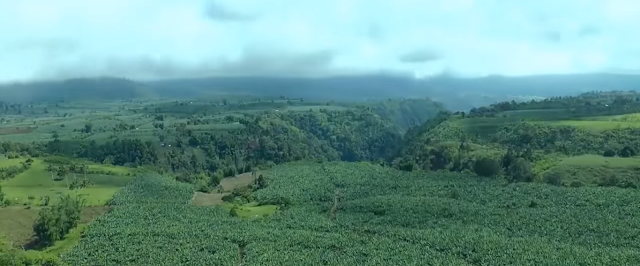

Land Preparation for Banana Cultivation - Part I || Surely you are already familiar with this one plant, bananas have become a favorite food of the people today. There are so many types of banana varieties such as Ambon banana, Kepok banana, mas banana, plantain, jackfruit banana, horn banana, and so on. Banana cultivation promises bright prospects. Banana (Musa sp.) Is a very popular tropical plant. The fruit is popular and has been sent to various parts of the world.
Indonesia has a high diversity of bananas. There are at least 10 varieties of superior bananas that flood local and export markets. If you want to know more about the benefits of bananas for health you can visit our article about the benefits of bananas for health. Okay, we just discussed further how to cultivate banana plants so that the abundant harvest.
I PRACTICAL STEPS FOR BANANA CULTIVATION
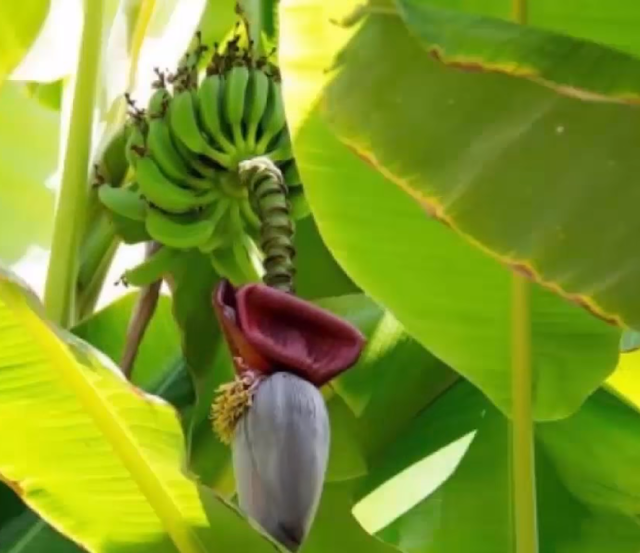

A. Requirements for Growing Banana Plants
1. Climate
- Banana plants are suitable for areas with tropical climates with high air humidity and quite hot weather conditions. But if the condition of your land is in subtropical or mountainous areas, it doesn't matter because banana plants can adapt to cold enough weather. This plant can survive in areas that lack water, because bananas can supply water from stems that have high water content, but consequently their growth is not optimal.
- Note also with wind speed conditions at the location of your land because if the wind speed on your land is high enough to damage banana leaves and affect plant growth.
- Rainfall conditions that are good for banana cultivation are in the range of 1520-3800 mm per one-time growth, with the assumption that in one planting period there are 2 months not rain. try to cultivate bananas to make mounds so that there is no puddle.
- Bananas are typical of tropical plants. It grows well from the lowlands to an altitude of 1300 meters above sea level. The desired rainfall of this plant is around 1500 to 2500 mm per year with a temperature of 15-35 ° C.
- Banana plants can grow on almost all types of soil. But the most suitable type of soil is clay-like, alluvial, high in calcium and organic matter.

2. Banana Planting Media
- Banana plants can grow optimally in soil conditions that are rich in nutrients and have heavy lime or soil content. This plant has greediness for food, so you need to prepare land that has high nutrients. You can do fertilization to increase soil nutrients by using compost and manure.
- Banana plants should get intensive irrigation, but try not to have puddles in the land.
- Note also with the condition of the ground water level, for in the wet area is 50-200 cm, while the half wet area is 100-200 cm, and in the dry area is 50-150 cm. The location of erosion-affected land will not produce good bananas and this plant cannot live optimally on soil that has a 0.07% salt content.

Read more:
3. Place Height
- The height at which banana plants can grow in the lowlands to the highlands with altitude above sea level. Whereas for Ambonese banana, horn banana, and jackfruit banana can grow well at an altitude of 1000m above sea level (asl).

B. Stages of Banana Cultivation
Land Preparation for Banana Cultivation - Part I || Seedlings have an important role in banana cultivation. To get maximum results always use seeds that are free of disease. If you can get superior varieties of seeds from a trusted institution. There are 3 types of seeds for banana cultivation, namely in the form of tillers, weevils and tissue culture results.
- Seedlings are seeds taken from banana plants that already have shoots or children. The child is separated from a mature and healthy banana plant.
- The weevil seeds are obtained from the harvested banana plant. Then the plant is dismantled and taken out of the hump (bottom base). The weevil is cleaned, because it is breathed without damaging the shoots. Then split again about the size of buds, or about 10x10x10 cm. Then weeds are planted in the planting medium. Seedlings from weevils are ready to be used for banana cultivation after growing 3-4 months.
- Tissue culture is a technology to multiply plants carried out in the laboratory. Seeds from this tissue culture are usually free of all diseases and can be held in large quantities. Seed size is also uniform so the harvest time setting is easier to do.

1. Selection of Banana Seeds
Propagation of banana plants using vegetative methods, breeding process through buds or banana children. Following are the requirements for banana plant nurseries:
- The condition of a good banana plant seeds has a length of 1-1.5 meters with a diameter of about 15-20 cm. We recommend that you use seeds that come from healthy and fruitful banana brooders. The height of banana seedlings can affect the productivity of bananas in fruiting (a significant effect on the number of combs in each bunch).
- There are two types of banana plant nurseries namely young puppies and adult puppies. You should use adult puppies because they usually have a flower and food reserves in a banana hump.
- We recommend that you choose seeds that have a pointed shape like a sword, with narrow leaves from you using broad-leaved banana seeds.
2. Seed Preparation
You can get banana seeds by buying at an agricultural nursery shop or using banana seeds from your own garden. Use a spacing of 2 × 2 meters for banana cultivation. If you use your own broodstock, it is better to limit the number of seedlings around 7-9 in brood bananas, if more than 9 shoots should be cut to maintain the quality of seedlings.


Before your seeds are planted, you should first do sanitation to avoid the spread of pests and diseases. The following are sanitation steps for banana seeds:
- After the seedlings are cut from the brood, immediately clean the soil attached to the roots
- It is best to keep the seeds 1-2 days in a shady location so that the wound after cutting dries, the banana leaves are wide
- Taking immersion on the stem neck-limited seedlings using insecticides 0.5-1 percent within 10 minutes. Then the seeds are aerated briefly
- If you don't have insecticides it doesn't matter, you can use running water to soak the seed bulbs for 2 days.
- If you have a nematode pest in your field, you should first soak it in hot water for a few minutes to kill the pest.

3. Preparation of Banana Cultivation Land
- Make sure the land to be used as a place for banana cultivation is free from Fusarium and Pseudomonas disease. If previously the area had been infected by the disease, properly control pests and diseases.
- Clean the land from weeds, hoes or plows of soil with a depth of 30-40 cm. Make longitudinal beds according to the contour of the land. The distance between beds is adjusted according to the spacing.
- The planting distance of banana cultivation depends on the variety of bananas. For example for barangan bananas about 3 × 3 meters. With a maximum population of 1000 clumps of plants per hectare. Every 50 meters distance ditches for 1 meter deep drainage channels.
- Then leave the land for 2-5 weeks.

4. Banana Planting Process
- Determination of plant patterns
You can use intercropping patterns in the first 3 months, because banana plants have a fairly wide spacing. Type of intercropping plants that you can mate with banana plants, namely vegetables or seasonal crops.


- Planting hole making
The recommended hole size is 50x50x50 cm for heavy soil types and 30x30x30 or 40x40x40 cm for loose soil types. Use a spacing of 3.3 x 3.3 meters.
- How to plant
You should start planting bananas in September-October or before the rainy season. Before planting bananas you should give organic fertilizer such as manure or compost in each planting hole as much as 15-20 kg. Organic fertilizers that you give greatly affect the quality of the taste of bananas.


5. Maintenance of Banana Plants
- Thinning
In order to obtain a good crop, it is recommended that one banana clump has 3-4 stems. Cut the shoots / tillers regularly so that in one clump there are various kinds of tillers that have different ages (growth phase). After reaching the age of 5 years, dismantle the clump to replace the new banana plant.
- Weeding
Clean weeds and grasses that can interfere with the growth of the parent and banana saplings. Do the weeding process during the time so that the roots and shoots of the banana can increase. Banana roots have a length of about 15cm below the surface of the soil, therefore we should not need to do the weeding process inside.
- Packing
Banana leaves that have begun to dry are immediately trimmed to maintain cleanliness and prevent the spread of pests. You can do female activities at any time.
- Fertilization
Banana plants really need a large amount of potassium in the soil. In 1 hectare of land, it takes 207 kilograms of urea, 138 kilograms of super phosphate, 608 kilograms of KCl, and 200 kilograms of limestone as the main source of calcium. N Fertilizer (Nitrogen) is given routinely 2 times a year where the laying is in a run around the clump of banana plants. After fertilization, the runner sprinkled with fertilizer is then covered with soil. Whereas for potassium and phosphate fertilizer is carried out 6 months after planting (2 times in one year).
- Watering
Banana plants can grow well if the irrigation is maintained. The method of irrigation can be watered or drained between the lines of banana plants.
- Fruit maintenance
Land Preparation for Banana Cultivation - Part I || Banana Cultivation - If the banana's heart is 25 cm away from the last banana comb, the cutting process must be carried out so that the growth of the banana is not disturbed. If the fruit combs have expanded perfectly, banana bunches should be wrapped using clear plastic bags to maintain the smoothness of the fruit to avoid pest damage. Use polyethylene plastic bags (can be purchased in plastic stores) 0.5 mm thick and then given a hole with a diameter of 1.25 cm. Arrange in such a way that the plastic can cover 15-45 cm above the top of the comb and 25 cm below the top of the bottom comb.


6. Banana Plant Diseases and Weeds
a. Banana Pests
- Leaf caterpillar (Erienota thrax.)
The part of the banana that is attacked is the leaf.
- Attack symptoms: the leaves roll like a chimney and tear up the leaves.
- Control methods: using a suitable insecticide is not yet available, you can try using Malathion insecticide.
- Attack symptoms: the leaves roll like a chimney and tear up the leaves.
- Control methods: using a suitable insecticide is not yet available, you can try using Malathion insecticide.
- Real beetle (Cosmopolites sordidus)
The part of the banana that is attacked is the petals, stems.
- Symptoms of attack: the halls up or down in the petals, the stem of a banana plant full of aisles.
- Control method: sanitation on a banana clump, immediately clean the clumps from the remnants of banana stems, use sanitary seeds.
- Symptoms of attack: the halls up or down in the petals, the stem of a banana plant full of aisles.
- Control method: sanitation on a banana clump, immediately clean the clumps from the remnants of banana stems, use sanitary seeds.
- Nematodes (Rotulenchus similis, Radopholus similis)
The part of the banana that is attacked is the root.
- Attack symptoms: banana plants look miserable, small cavities or spots are found on the roots, swollen roots.
- Control method: use sanitary seeds, multiply soil humus content and use land with small clay content.

- Attack symptoms: banana plants look miserable, small cavities or spots are found on the roots, swollen roots.
- Control method: use sanitary seeds, multiply soil humus content and use land with small clay content.

b. Banana Disease
- Blood disease
Cause: Xanthomonas celebensis (bacteria).
The part of the banana that is attacked is the inner banana plant tissue
- Attack symptoms: banana tissue becomes reddish as it bleeds
- Control: unloading and burning sick banana plants
- Panama
Causes: Attack of Fusarium oxysporum Fungus
The part of the banana that is attacked is the leaf
- Attack symptoms: leaves wither then break, first attack on the outer leaves and then the inner leaves, banana leaf midrib splitting longitudinally, will remove black sap vessels.
- Control method: unload and burn sick sick banana plants
- Leaf leaves
Cause: Fungus Cercospora musae.
Parts of bananas that are attacked are leaves that appear brown spots that are more widespread.
- How to Control: use a fungicide that contains Copper oxide or Bordeaux Porridge (BB).
- Way
Cause: Bacillus bacteria
The part of the banana that is attacked is the root.
- Attack symptoms: plants wither and die.
- Control method: unload and burn sick sick banana plants
- Leaves
Cause: viral infection through intermediary aphids Pentalonia nigronervosa
The parts of bananas that are attacked are shoots.
- Attack symptoms: banana leaf leaves grow upright in groups
- Control methods: unload and burn sick sick banana plants


c. Weed on Bananas
Usually shortly after planting bananas and when the adult canopy has begun to form, weeds become one of the problems that must be addressed immediately. The method of control is as follows:
Usually shortly after planting bananas and when the adult canopy has begun to form, weeds become one of the problems that must be addressed immediately. The method of control is as follows:
- Use herbicides such as Gesapax 80 Wp, Round up, Paraquat and Dalapon.
- Plant ground cover crops that can withstand erosion, are resistant to shade, are not easily attacked by pests, not propagating plants. For example, Geophila repens.
- Cover the ground using polyethylene plastic.

6. Harvesting Banana Fruit
The age of harvesting bananas actually depends on the purpose of the market or distribution. For the purpose of exporting fruit must be harvested faster. However, in general, bananas are harvested at 3/4 maturity level for export markets, and for local markets can be harvested at full maturity level. Or, when viewed from the age of bananas can be harvested about 3-4 months calculated from the flower blooms. The characteristics of the fruit are ready to be harvested rounded shape, there is no sharp angle fold. Flowers found on the end of the fruit have dried up and are easily broken. The skin color changes from dark green to light green and the flag leaves on the plant have dried up. When checked in a laboratory, harvested bananas have a starch content of 19.5-20% and a sugar content of 0.5-1%.

Land Preparation for Banana Cultivation - Part I || Banana Cultivation - Things to keep in mind, do not let pisnag fall when harvested. Banana tree cutting is approximately two thirds of the land. Drain the sap that drips from the bunches. Bananas can be harvested green with round fruit circles and the corners do not elbow. The age of ready-to-harvest bananas is between 100 - 120 days after the appearance of flowers (can depend on cultivars or planted clones). In order for the ripening process to be uniform and simultaneous, it should be stimulated using ingredients such as smoke from burnt wood leaves, fresh leaves (acacia leaves), use of carbide, ethrel / ethepon, propylene, acetylene, about 10-12 hours.
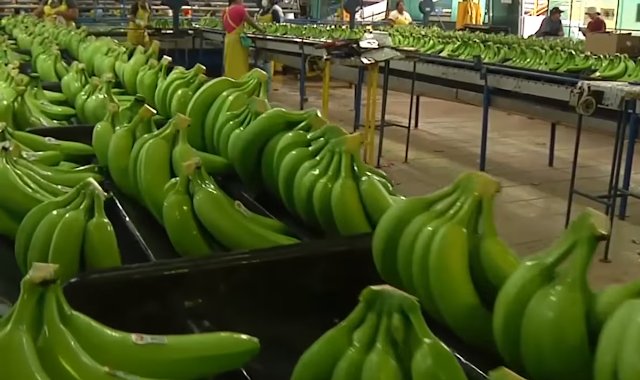
7. Postharvest Banana Fruit
Fruit harvested from banana cultivation can be directly packaged using bamboo baskets and immediately transported to distributors or markets. If you want to deposit bananas into modern markets, supermarkets and supermarkets, you can do packaging per comb or per several pieces according to the demands of the modern market. The appearance of bananas greatly affects the sale of bananas in the modern market.
There has been considerable discussion about Land Preparation for Banana Cultivation - Part I || Banana Cultivation. I apologize, if there is an error from this article. Finally, please leave your comments below as support and participation !!!
source :
- Wikipedia
The age of harvesting bananas actually depends on the purpose of the market or distribution. For the purpose of exporting fruit must be harvested faster. However, in general, bananas are harvested at 3/4 maturity level for export markets, and for local markets can be harvested at full maturity level. Or, when viewed from the age of bananas can be harvested about 3-4 months calculated from the flower blooms. The characteristics of the fruit are ready to be harvested rounded shape, there is no sharp angle fold. Flowers found on the end of the fruit have dried up and are easily broken. The skin color changes from dark green to light green and the flag leaves on the plant have dried up. When checked in a laboratory, harvested bananas have a starch content of 19.5-20% and a sugar content of 0.5-1%.

Land Preparation for Banana Cultivation - Part I || Banana Cultivation - Things to keep in mind, do not let pisnag fall when harvested. Banana tree cutting is approximately two thirds of the land. Drain the sap that drips from the bunches. Bananas can be harvested green with round fruit circles and the corners do not elbow. The age of ready-to-harvest bananas is between 100 - 120 days after the appearance of flowers (can depend on cultivars or planted clones). In order for the ripening process to be uniform and simultaneous, it should be stimulated using ingredients such as smoke from burnt wood leaves, fresh leaves (acacia leaves), use of carbide, ethrel / ethepon, propylene, acetylene, about 10-12 hours.

7. Postharvest Banana Fruit
Fruit harvested from banana cultivation can be directly packaged using bamboo baskets and immediately transported to distributors or markets. If you want to deposit bananas into modern markets, supermarkets and supermarkets, you can do packaging per comb or per several pieces according to the demands of the modern market. The appearance of bananas greatly affects the sale of bananas in the modern market.
There has been considerable discussion about Land Preparation for Banana Cultivation - Part I || Banana Cultivation. I apologize, if there is an error from this article. Finally, please leave your comments below as support and participation !!!
source :
- Wikipedia


