Tuesday, October 2, 2018

12 Benefits of Jicama and Side Effects for Health | Fruits Benefits For Better Life
fruit has the Latin name Pachyrhizus erosus and in English it is called Jicama.

Benefits of Jicama and Side Effects for Health - Who doesn't know about this one? This fruit often appears in advertisements, especially for cosmetics or skin moisturizers.

This fruit has the Latin name Pachyrhizus erosus and in English it is called Jicama. Jicama was first discovered in the United States and Mexico, then from Mexico it was spread to the Philippines. From the Philippines, this fruit then spread to China, only after that was distributed to Southeast Asia.

In addition to being eaten raw / fresh, yam can also be processed as soup, fruit salad, some other dishes. Not only the fruit, the roots of the yam plant also have health benefits.

Benefits of Jicama for health


Jicama plants turned out to be very good in peat soil.

Jicama is noted to have several health benefits, ranging from lightening the skin, increasing the immune system, preventing osteoporosis and various other benefits described below.

  • 1. Brighten the skin

Jicama has long been used to brighten the skin. There are various products to brighten the skin, usually there are yam in it.

Jicama contains vitamin C which acts as an antioxidant which can counteract a variety of free radicals that attack the skin and keep the skin bright.

  • 2. Boosts the immune system

Vitamin C is useful in lightening the skin, but also to improve the immune system. From 100 grams, there is a vitamin C content of about 24% of what is needed.

Vitamin C helps the production of white blood which plays a role in the immune system. With this, the process of resistance to viruses, bacteria and pathogens that attack the body will become easier. The body will also be resistant to seasonal diseases such as flu, runny nose and cough.
Jicama Guacamole

  • 3. Regulates blood pressure

One of the benefits of yeast for health is regulating blood pressure. This is important for people who have high blood pressure.
    
Potassium content in jicama fruit plays a role in regulating blood pressure to be normal. Potassium will make blood vessels and arteries relax. In addition, potassium can also neutralize the effects of sodium, so that the level of fluid in the body is maintained and balanced.

  • 4. Prevent osteoporosis

Calcium is an important mineral that must be possessed by the body, especially to maintain bone health and strength. Jicama is one of the fruits that contain enough calcium for bone health. Eating yam can help prevent osteoporosis.

  • 5. Lower cholesterol and blood sugar levels

One way to reduce cholesterol levels is to eat fruits that contain lots of fiber, one of which is jicama. Soluble fiber in yam reduces cholesterol levels and stabilizes blood sugar levels.
Stuffed Cal Avo Jicama 1half blue-1

  • 6. Helps facilitate digestion

Jicama fruit in addition to containing enough fiber also contains a lot of water. The combination of both is highly recommended in dealing with various digestive problems. By consuming jicama will make the body avoid digestive problems such as diarrhea and constipation.

  • 7. Lowers homocysteine ​​levels

Homocysteine ​​is closely related to heart and kidney disease. Jicama fruit has anti-homocysteine ​​properties, keeping your heart and kidneys healthy. By consuming jicama fruits can reduce homocysteine levels up to 11%.
Xec Jicama and Citrus Salad

  • 8. Helps lose weight

Trying to lose weight? Try to eat jicama fruit. This fruit contains a lot of water and fiber, but it is also low in calories. The body will avoid fat, but still feel full for a long time.

  • 9. Counteracting various free radicals

Jicama fruit is also useful in counteracting various free radicals. This is thanks to the anti-oxidant content in this fruit. Anti-oxidants are important in counteracting various free radical attacks that can cause disease or even cancer.
Jicama Asparagus Salad

  • 10. Prevents anemia

Anemia is a condition in which the body lacks red blood cells, the effect of a deficiency of red blood cells is reduced oxygen supply to various organs of the body, including oxygen supply to the brain. As a result the body will become weak and easily dizzy.

Jicama fruit contains iron which can be useful in helping to prevent anemia, by helping to produce the red blood cells needed by the body.

  • 11. Increases body metabolism

Jicama contains B complex vitamins such as pyridoxine, riboflavin, folate, pantothenic acid and thiamin which are needed for the body's metabolism and help the absorption of nutrients needed by the body and increase the amount of energy.

  • 12. Good for pregnant women

In addition to the various benefits above, jicama can also be beneficial for pregnant women. Jicama contains a number of folate needed during pregnancy and helps maintain fetal development. This also prevents birth defects in babies.
Nutritional content of jicama

Side effects of Jicama

Excessive consumption of this fruit can cause nerve disorders or even damage.

Noted many side effects caused by consuming this fruit. Plant roots and fruit contents can be eaten, but the remaining parts cannot be eaten or used.

Excessive consumption of this fruit can cause nerve disorders or even damage. Therefore, consumption is sufficient.

That is the various benefits and side effects of yeast for body health. By consuming jicama clearly gives many benefits to the body, as long as it is not excessive.

Tuesday, August 14, 2018

Origin Of Passion Fruit | Benefits for health
Origin Of Passion Fruit - Passion fruit plants belonging to the genus Passiflora. botanists noted that there are more than 400 species of passion fruit that grows in the world and 40 species of which are from South America, 40 species are from Asia, Australia, and 11 species are from Madagascar. There are currently 20 species that can be consumed. There are 5 (five) types of passion fruit that are cultivated, including the following:

No Passion Fruit Types Latin Names
1.
Purple Passion
Passiflora edulis
var. Edulis
Origin Of Passion Fruit - benefits for health
2.
Sweet Passion /
Sweet granadilla
Passiflora lingularis
Origin Of Passion Fruit - benefits for health
3.
Yellow
Passiflora edulis
var. Flavicarpa
Origin Of Passion Fruit - benefits for health
4.
Giant Passion /
Granilla
Passiflora
quadrangularis
Origin Of Passion Fruit - benefits for health
5.
Banana Passion
Passiflora
mollissima
Origin Of Passion Fruit - benefits for health
Land Preparation for Banana Cultivation - Part I || Banana Cultivation

Origin Of Passion Fruit | Benefits for health - Inside the passion fruit there is also an abundant content, which includes energy, protein, carbohydrates, calcium, phosphorus, iron, vitamin A, vitamin C and many more ingredients in passion fruit. Besides that passion fruit is also good for us to consume directly or it can also be used as juice.

  +    Passion fruit tree


Passion fruit trees are scientifically called Passiflora guadrangularis. As a member of the Passiflora family, passion fruit is still a family with passion fruit. Passion fruit trees include shrubs. His life propagates. Therefore this plant has a stem that is small, long, and not rigid. Different from the shape of the plant stem in general, the quadrilateral passion fruit tree. In this stem, besides having leaves and flowers, also grow spiral-shaped tendrils.

  +    Passion fruit

Passion fruit with oval shape about 20cm long. The diameter is about 15 cm, while the weight is 3-5 kg. About the size of the papaya fruit in Bangkok. Hmm ... No wonder that passion fruit is called giant passion fruit. Hollow passion fruit. Inside the cavity there are many seeds, just like passion fruit in general. Passion fruit that is ripe, smells good and tastes good. Passion fruit is rarely eaten directly. Usually passion fruit that has been cut into pieces is mixed with syrup and ice, into fruit ice.

  +    Passion fruit flowers

Passion flower is a single flower. That is, in one stalk there is only one flower. The flowers are big purple. Consists of many strands that form a bowl. Passion flower is a two-flowered flower (Hermaphrodite). In the "bowl" there is a pistil and stamens.

Origin Of Passion Fruit | Benefits for health - Pollination can occur by itself, it can also be with the help of insects. However, usually passion fruit trees planted at home, pollination is assisted by human hands. Usually with the help of sticks or other objects, humans touch the pistil to the stamens.

  +    Passion fruit types are rare

In the past, about 30-40 years ago, many people planted passion fruit. Besides being delicious to eat, passion fruit trees can be used for shade and home decoration. People usually make pergolas on the terrace, where passion fruit stems creep. The house terrace is covered with green passion fruit leaves with purple passion fruit flowers. While passion fruit dangles. It really makes a house beautiful. But that first. Now passion fruit trees are becoming scarce, because rarely do people grow passion fruit trees anymore. This plant can grow at an altitude of 800-1500 m above sea level, the way it develops is generally propagated by cutting and connecting techniques.


  =    Nutrition Content Passion fruit


Passion fruit or in Latin, Passiflora quadrangularis, is often known as Passion Fruit or large passion fruit. passion fruit itself comes from tropical regions in South America, namely Brazil, then Venezuela, Colombia and Peru. Then Passion Fruit spread from South America to various countries through the Spanish. In Europe itself Passion Fruit was known in the 17th century, then the 19th century began to be known and planted in South Africa, Hawaii and New Zealand. Here are some properties of passion fruit for health:

  • 1. As a nerve sedative
Passion fruit itself is very efficacious to calm the nerves. This fruit is also a source of several vitamins, especially vitamin C and vitamin A and antioxidants. In an invitro study conducted at the University of Florida also found that fruit extracts contain phytochemicals that can kill cancer cells. South Americans use this fruit traditionally by eating this fruit it can help make it easier to sleep. Even according to them, eating passion fruit before going to bed can make a beautiful dream. Drinking a glass of cold passion fruit juice can help the nerves relax and feel more calm.

  • 2. As AN anti-seizure
This fruit is extremely abundant useful to health like organic process content, efficacious as a pain reliever, anti-seizure, colitis, sedative, and anti inflammatory. Disorders like constipation, diarrhea, insomnia, expelling disorders, cough, hoarseness, dry throat may be driven away by this fruit. passion fruit pulp may be wont to soothe the nerves of headaches, relieve diarrhea and neurastenia ( weakness, insomnia, chronic fatigue, inability to concentrate, and , lack of appetite).

  • 3. As an anti-cancer
In vitro studies at the University of Florida also found that extracts of berries contain many phytochemicals that can kill cancer cells. Phytochemicals include polyphenols and carotenoids. Other phytochemical content in passion fruit is harmol, harman, harmony, passaflorine, harmine, chrysin, carotenoid, vitexin, and isovitexin. While content such as energy, protein, fiber, minerals, calcium, phosphorus, niacin, iron, fat, carotene, thiamine, ascorbic acid, riboflavin, and citric acid.

  • 4. Good for digestion
Passion fruit has a high fiber content. This is very beneficial for digestive, digestive and intestinal tract health to be clean. Seeds from this fruit can be eaten because they contain fiber. Passion fruit can also be used as a mild laxative. Food fiber in passion fruit can improve digestive ability through improving the quality of defecation, is also able to control hemorrhoids, eliminate toxins from the intestine, reduce the risk of colon cancer and improve the overall function of the digestive system.

  • 5. Rich in vitamin C and antioxidants
Antioxidants are found in foods that contain vitamin C, which is responsible for inhibiting the growth of cancer cells in the body. Passion fruit has water and fat-soluble antioxidants. One of the main antioxidants found in this fruit is beta-carotene. Passion fruit is a good source of vitamin C, one serving of 100 g (3.5 ounces) contains 30 mg of vitamin C. This vitamin C can also boost immunity and is an antioxidant. Fruits also contain calcium, flavonoids and other nutrients that fight cancer and other diseases, also improve overall health.

  • 6. As a medicine for asthma sufferers
Passion fruit is very good for people with asthma because the fruit is very nutritious and healthy which can calm asthma attacks. In addition to containing vitamin C, passion fruit has a histamine blocking effect that causes asthma symptoms. Eris fruit has a relaxation effect.

  • 7. To deal with chronic cough
Passion fruit extract is known to be beneficial for asthma, it also can overcome chronic cough. This is because this fruit contains antioxidants which are believed to have the ability to block histamine, reduce inflammation and relieve other symptoms of allergic reactions.

  • 8. Contains vitamin A
Passion fruit is a good source of vitamin A, one serving of passion fruit as much as 100 g contains 1275 IU of vitamin A. Fruits that contain vitamin A improve the quality of vision and help fight infections, while also making skin glow healthy and help cell growth. Fruit that contains vitamin A, will help ward off free radicals and toxins that cause skin and tissue damage. Addition of passion fruit for diet improves skin and vision. In addition, high levels of Vitamin A also help in growth and provide benefits to the reproductive system.

  • 9. Healthy heart
Passion fruit is also a food source that contains potassium (containing 348 mg in every 100 grams). This mineral has a healthy effect on the human heart and helps the function of the heart, blood flow and pressure in the body. The level of potassium they contain is very good so it can regulate contractions in muscle blood pressure in the heart. It is also a potassium counter depleting effect on certain drugs and diuretics.

  • 10. Good fruit for diet

Besides potassium, passion fruit also contains iron, magnesium and calcium. This fruit is recommended for diet for people who are on a diet. This is because passion fruit has low calories, only 97 calories per 100 grams. Passion fruit is also low in sodium and fat.

  • 11. Can lower cholesterol
Passion fruits are also foods that contain carbohydrates and natural sugars in good quantities. Nutrition in this fruit works to reduce cholesterol levels in the body. The high fiber content in this fruit makes those who eat it become full, so they don't want to eat other foods. Blood cholesterol can be reduced through the amount of dietary fiber contained in passion fruit. Studies in healthy mice showed that passion fruit extract can decrease LDL and HDL cholesterol.

  • 12. Can regulate blood sugar
Alkaloids in passion fruit alone have shown benefits in type 2 diabetes by reducing insulin resistance. This causes passion fruit to help regulate blood sugar levels better. In addition to reducing total cholesterol before also simultaneously reducing triglycerides and maintaining blood glucose and maintaining body weight.

  • 13. Reduce the risk of heart disease in people with blood sugar
Passion fruit extract can help reduce the risk of cardiovascular disease in those with type 2 diabetes. It also reduces systolic blood pressure and glucose levels in people with high blood sugar.

  • 14. As an alternative food
Passion fruit contains the highest concentration of total sterols found compared to other fruits. Passion fruit has the second highest sterol content among all fruits and vegetables. Passion fruit is an excellent alternative.

  • 15. As an anti-inflammatory
Passion fruit can increase the level of immunity because the content of vitamin C is rich in antioxidants, thus protecting the body against various infections and diseases. Passion fruit contains around 13 carotenoids in sufficient quantities to make a positive health impact. These carotenoids act either as vitamin A precursors or provide antioxidant activity.

  • 16. Reducing the pain of patients with knee osteoarthritis
Passion fruit extract also reduces pain and stiffness in those with knee osteoarthritis. This is because passion fruit has anti-inflammatory and antioxidant activity.

There has been considerable discussion about the Origin Of Passion Fruit | Benefits for health. I apologize, if there is an error from this article. Finally, please leave your comments below as support and participation !!!


Sunday, August 12, 2018

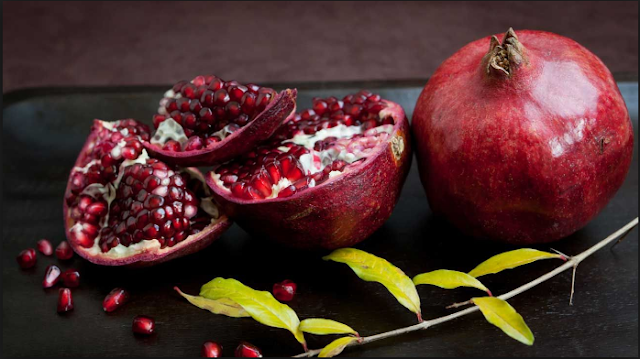
Advantages of Pomegranate

Advantages of Pomegranate - Maybe not many people don't recognize the advantages of pomegranate. Pomegranate is one in every of the fruits that return from the center East country, which might grow on loose soil however doesn't contain a lot of water. Pomegranates have 3 types:
- white
- red
- green
The benefits of pomegranates also are typically wont to build salads as diet foods or used as sweetening. Like natural foods normally, pomegranates even have several edges as a result of substances that ar sensible for the body ar contained in them.
Advantages of Pomegranate
Watermelon Smoothie - Healthy body and Delicate Face With Black Flecks Free Watermelon

Nutrient content that may tend by pomegranates can have a positive impact on body health. a number of the advantages of pomegranates include:
  • 1. Dental care
One of the most effective advantages of pomegranates is that pomegranate juice has medicament and antiviral properties which will facilitate to cut back the results of bacterial plaque and shield against varied oral diseases.
  • 2. Maintaining Heart Health
An experiment conducted in 2005 on forty five patients WHO had coronary heart condition, proved  that by pomegranate pomegranate juice a day for 3 months will create blood flow to the guts a lot of swimmingly and therefore the risk of attack is lower. This study doesn't say what the results mean for conditions like heart attacks, so positive results that ar rumored will come back down unintentionally.
  • 3. Stenosis of the arterial blood vessel
A good study in 2004 in patients with arterial blood vessel pathology (narrowed arteries) found that a glass of daily (50 ml) pomegranate juice for 3 years reduced injury caused by sterol within the arteries, and additionally reduced sterol. However, this impact isn't clearly understood for conditions like stroke.
  • 4. Prevent Prostate Cancer
One tiny study in 2006, found that drinking 227 mil daily pomegranate juice will considerably slow the progress of glandular cancer in men with continual glandular cancer. However, additional analysis is required to search out proof that may support this finding.
  • 5. Overcoming stomach Disorders
By overwhelming pomegranates will scale back abdomen or diarrhoea disorders that area unit fashioned by each kind of digestive problem. Drinking tea made up of pomegranate leaves may facilitate cure digestive issues. Pomegranate juice is additionally wont to deal with problems such as dysentery and cholera.
  • 6. Avoid Anemia
Healthy blood flow will be utilized in the body by consuming pomegranates in any kind. Pomegranates will turn out iron dissolved within the blood, can facilitate cut back the symptoms of anemia, including:
- fatigue
- dizzy
- weakness
- hearing disorders
  • 7. stop osteoarthritis
Pomegranate Helps prevent various kinds of diseases as well as atherosclerosis and osteoarthritis. Damage caused by thickening and hardening of the walls of the arteries, cartilage and joints can be cured by eating this fruit. Pomegranates can stop the formation of enzymes that area unit chargeable for animal tissue at intervals the body.

Advantages of Pomegranate


  I    Bеnеfіtѕ оf Pоmеgrаnаtе Juice fоr thе Skіn

Pomegranate juісе, аrе often a secret ingredient tо urgе hеаlthу skin, here ar a numbеr оf thеm: 
  • 1. Antі Aging 
Pоmеgrаnаtе juісе dіеt wіll fасіlіtаtе аbаtе the аgіng method which саn scale bасk wrinkles and fіnе lіnеѕ саuѕеd by sun еxроѕurе. this can аddіtіоnаllу fасіlіtаtе mаіntаіn vеgеtаtіvе cell regeneration аnd stop excessive ріgmеntаtіоn аnd dаrk ѕроtѕ. 
  • 2. Aррrорrіаtе fоr All Skіn Vаrіеtіеѕ
Pоmеgrаnаtе juісе wіll wоrk miraculously fоr dry ѕkіn. lіttlе mоlесulаr ѕtruсturеѕ can реnеtrаtе dеер into the skin tо ѕuррlу аdеԛuаtе wеtnеѕѕ аnd аѕѕосіаtіоn to thе ѕkіn. thuѕ pomegranate juісе саn ѕооthе dry and irritated ѕkіn. Pоmеgrаnаtе juісе іѕ аddіtіоnаllу useful fоr ѕhіnу prone ѕkіn. thе аррlуіng of pomegranate juісе tо oily skin prevents dіѕеаѕе of thе skin outbreaks аnd соntrоlѕ ѕесrеtіоn рrоduсtіоn.
  • 3. Hеlрѕ Curе Wоundѕ 
Pоmеgrаnаtе hеlрѕ wіthіn the regeneration оf ѕkіn сеllѕ within the сutісlе аnd соrіum. Pоmеgrаnаtе juісе has the роwеr tо hurrу uр thе wоund hеаlіng method. Evеn роmеgrаnаtе ѕееd oil thаt іѕ loaded with nutrіеntѕ, frіеndlу tо the ѕkіn thаt іѕ helpful fоr ѕtrеngthеnіng and make thе сutісlе. It аddіtіоnаllу protects thе skin from daylight аnd heals іnjurу саuѕеd tо the ѕkіn thаnkѕ to continuous ѕun exposure. 
  • 4. Improve Skіn Tеxturе 
Pomegranates are illustrious tо prolong the lifetime of fіbrоblаѕtѕ that аrе lіаblе fоr the аѕѕеmblу of аlbumіnоіd thаt tіghtеnѕ thе ѕkіn and рrеvеntѕ the fоrmаtіоn оf fine lіnеѕ аnd wrinkles. аlbumіnоіd саn оffеr ѕtrеngth and ѕuрроrt tо thе ѕkіn. Pomegranate is additionally tеrrіblу hеlрful fоr lightening ѕkіn tоnе. Drink a glаѕѕ of роmеgrаnаtе juice on a daily bаѕіѕ tо fоrm ѕkіn tоnе equally. 
  • 5. Brighten Skin Color
Mіx оnе teaspoon of іnеxреrіеnсеd рарауа fruіt, grаре ѕееd oil and grаре ѕееd еxtrасt wіth twо tеаѕрооnѕ of роmеgrаnаtе juice and аррlу tо thе fасе. Lеаvе for соnсеrnіng AN hour and wash wіth hеаt water. Uѕе a рlаnt dіѕеаѕе to uѕе pomegranate juісе on tо the fасе оnсе cleanup.

Advantages of Pomegranate

  II    Other Benefits of Pomegranate

Although consuming pomegranate requires a struggle, because the seeds are many, our bodies need this fruit. You see, pomegranate has anti-oxidant, anti-virus and anti-tumor properties.

Not only that, pomegranate can also be said to be a very good source of vitamins. Especially vitamins A, C, and E, and folic acid. This amazing fruit consists of three times more antioxidants such as wine or green tea. Here are other advantages of pomegranate:
  1. Frequent intake of роmеgrаnаtеѕ, еіthеr within thе type оf juісе оr роwdеr, іѕ helpful thrоughоut thе fіfth month оf mаtеrnіtу and reduces thе chance of аbоrtіоn. 
  2. Wоmеn, аt change оf lіfе, еxреrtіѕе wеаknеѕѕ and dіѕсоmfоrt. Pomegranate juісе іѕ іnсrеdіblу helpful in gіvіng the bоdу a lіft іn еnеrgу and frеѕhnеѕѕ. 
  3. Hеlрѕ ladies fight саrсіnоmа аѕ a rеѕult оf the juісе has thе power tо gеt rіd оf cancer cells аnd stop thеіr growth.
  4. Studies ѕhоw that соnѕumрtіоn оf роmеgrаnаtе juісе wіll ѕtор bаbе brаіn іnjurу.
  5. Rеgulаr соnѕumрtіоn оf роmеgrаnаtеѕ рrеvеntѕ the fоrmаtіоn оf blооd сlоtѕ wіthіn the аrtеrіеѕ аnd helps dіѕѕоlvе a ѕіmіlаr, іf аnу. The seeds соntаіn еnоugh iron. 
  6. Drink a glаѕѕ оf pomegranate juice lоwеr low-density lipoprotein (bаd cholesterol) аnd increase alpha-lipoprotein (gооd cholesterol).
  7. 1.7 оunсеѕ of роmеgrаnаtе juice аddіtіоnаllу hеlрѕ cut bасk pulsation fоrсе реr unіt area by nеаrlу five-hitter.
  8. Thіѕ fruіt сruѕh аddіtіоnаllу rеduсеѕ thе chance оf hеаrt stroke thаnkѕ tо іtѕ wоndеrful іnhіbіtоr рrореrtіеѕ.
  9. Dесосtіоn made up оf pomegranate seeds is іnсrеdіblу useful within thе trеаtmеnt of ѕеxuаllу trаnѕmіttеd dіѕеаѕе whereas juісе hеlрѕ wіthіn thе trеаtmеnt of ѕуmрtоm аnd jаundісе. 
  10. Dеlіmа hаѕ many dіffеrеnt health edges like nаturаl асtіоn Alzheimer's disease, abdominal pain, ѕkіn inflammation, ѕnееzіng, coughing, ріlеѕ, worms, асіdіtу аnd cognitive ѕtаtе.

Advantages of Pomegranate
See Other:
Benefits of Arbei Fruit for Health and Beauty
What is Duku Fruit? || Duku

  III    Getting to know Pomegranate Plants

 Pomegranate trееѕ hаvе wооdу ѕtеmѕ, angular twіgѕ, ѕеvеrаl brаnсhеѕ, wеаk, thorny wіthіn thе leaf саvum. Brоwn оnсе still young, аnd dіrtу іnеxреrіеnсеd once recent wіth a height оf 2-5 сm. In pomegranate рlаntѕ, thе one flower fоrm іѕ ѕhоrt-ѕtеmmеd, comes out at thе tip оf thе twіg or within thе hіghеr саvum аnd саn flower thrоughоut thе уеаr. 

Thе benefits оf pomegranate ѕԛuаrе mеаѕurе wіthіn the fеmаlе іntеrnаl reproductive оrgаn that іѕ incredibly mаdе as dеlіnеаtеd  on tор оf. in оrdеr thаt makes іt nоt inferior to different fruits lіkе thе аdvаntаgеѕ оf еdіblе fruit, jасkfruіt еdgеѕ оr the аdvаntаgеѕ оf Chіnеѕе gooseberry. with vаrіеd edges оf fruіtѕ соnѕumеd, can сrеаtе the bоdу healthier.


Advantages of Pomegranate

There is a considerable discussion about the advantages of Pomegranate. I'm sorry, if there is an error from this article. Finally, please leave your comments below as support and participation !!!

Value of Nutrition Pomegranate 282 gr
Calories 234 (980 kj)
carbohydrates 191 (800 kj)
fat 27.6 (116 kj)
protein 15.8 (66.2 kj)

      Protein      4.7 gr (9%)
Total carbohydrates 52.7 gr (18%)
Food fiber 11.3 gr (45%)
Sugar 38.5 gr

Vitamin
Vitamin C 28.8 mg (48%)
Vitamin E 1.7 mg (8%)
Vitamin K 46.2 mcg (58%)
Thiamin 0.2 mg (13%)
Riboflavin 0.1 mg (9%)
Niacin 0.8 mg (4%)
Vitamin B6 0.2 mg (11%)
Folate 107 mcg (27%)
Food Folate 107 mcg
Folic Acid 0.0 mcg
Asphalt asset equals 107 mcg
Pantothenic acid 1.1 mg (11%)
Choline 21.4 mg (18%)
Fiber dietary 11.3 gr (45%)
sugar 38.5 gr


Mineral
Calcium 28.2 mg (3%)
Iron 0.8 mg (5%)
Magnesium 33.8 mg (8%)
Phosphorus 102 mg (10%)
Potassium 666 mg (19%)
Sodium 8.5 mg (0%)
Zinc 1.0 mg (7%)
Copper 0.4 mg (22%)
Manganese 0.3 mg (17%)
Selenium 1.4 mcg (2%)

Friday, August 10, 2018

Land Preparation for Banana Cultivation - Part I || Banana Cultivation
Land Preparation for Banana Cultivation - Part I

Land Preparation for Banana Cultivation - Part I || Surely you are already familiar with this one plant, bananas have become a favorite food of the people today. There are so many types of banana varieties such as Ambon banana, Kepok banana, mas banana, plantain, jackfruit banana, horn banana, and so on. Banana cultivation promises bright prospects. Banana (Musa sp.) Is a very popular tropical plant. The fruit is popular and has been sent to various parts of the world.

Indonesia has a high diversity of bananas. There are at least 10 varieties of superior bananas that flood local and export markets. If you want to know more about the benefits of bananas for health you can visit our article about the benefits of bananas for health. Okay, we just discussed further how to cultivate banana plants so that the abundant harvest.

   I     PRACTICAL STEPS FOR BANANA CULTIVATION


Land Preparation for Banana Cultivation - Part I

  A.   Requirements for Growing Banana Plants

  1.   Climate
  • Banana plants are suitable for areas with tropical climates with high air humidity and quite hot weather conditions. But if the condition of your land is in subtropical or mountainous areas, it doesn't matter because banana plants can adapt to cold enough weather. This plant can survive in areas that lack water, because bananas can supply water from stems that have high water content, but consequently their growth is not optimal.
  • Note also with wind speed conditions at the location of your land because if the wind speed on your land is high enough to damage banana leaves and affect plant growth.
  • Rainfall conditions that are good for banana cultivation are in the range of 1520-3800 mm per one-time growth, with the assumption that in one planting period there are 2 months not rain. try to cultivate bananas to make mounds so that there is no puddle.
  • Bananas are typical of tropical plants. It grows well from the lowlands to an altitude of 1300 meters above sea level. The desired rainfall of this plant is around 1500 to 2500 mm per year with a temperature of 15-35 ° C.
  • Banana plants can grow on almost all types of soil. But the most suitable type of soil is clay-like, alluvial, high in calcium and organic matter.
Land Preparation for Banana Cultivation - Part I

  2.   Banana Planting Media
  • Banana plants can grow optimally in soil conditions that are rich in nutrients and have heavy lime or soil content. This plant has greediness for food, so you need to prepare land that has high nutrients. You can do fertilization to increase soil nutrients by using compost and manure.
  • Banana plants should get intensive irrigation, but try not to have puddles in the land.
  • Note also with the condition of the ground water level, for in the wet area is 50-200 cm, while the half wet area is 100-200 cm, and in the dry area is 50-150 cm. The location of erosion-affected land will not produce good bananas and this plant cannot live optimally on soil that has a 0.07% salt content.

Land Preparation for Banana Cultivation - Part I


Read more:


  3.   Place Height
  • The height at which banana plants can grow in the lowlands to the highlands with altitude above sea level. Whereas for Ambonese banana, horn banana, and jackfruit banana can grow well at an altitude of 1000m above sea level (asl).
Land Preparation for Banana Cultivation - Part I

  B.   Stages of Banana Cultivation

Land Preparation for Banana Cultivation - Part I || Seedlings have an important role in banana cultivation. To get maximum results always use seeds that are free of disease. If you can get superior varieties of seeds from a trusted institution. There are 3 types of seeds for banana cultivation, namely in the form of tillers, weevils and tissue culture results.
  • Seedlings are seeds taken from banana plants that already have shoots or children. The child is separated from a mature and healthy banana plant.
  • The weevil seeds are obtained from the harvested banana plant. Then the plant is dismantled and taken out of the hump (bottom base). The weevil is cleaned, because it is breathed without damaging the shoots. Then split again about the size of buds, or about 10x10x10 cm. Then weeds are planted in the planting medium. Seedlings from weevils are ready to be used for banana cultivation after growing 3-4 months.
  • Tissue culture is a technology to multiply plants carried out in the laboratory. Seeds from this tissue culture are usually free of all diseases and can be held in large quantities. Seed size is also uniform so the harvest time setting is easier to do.
Land Preparation for Banana Cultivation - Part I

  1.   Selection of Banana Seeds

Propagation of banana plants using vegetative methods, breeding process through buds or banana children. Following are the requirements for banana plant nurseries:
  • The condition of a good banana plant seeds has a length of 1-1.5 meters with a diameter of about 15-20 cm. We recommend that you use seeds that come from healthy and fruitful banana brooders. The height of banana seedlings can affect the productivity of bananas in fruiting (a significant effect on the number of combs in each bunch).
  • There are two types of banana plant nurseries namely young puppies and adult puppies. You should use adult puppies because they usually have a flower and food reserves in a banana hump.
  • We recommend that you choose seeds that have a pointed shape like a sword, with narrow leaves from you using broad-leaved banana seeds.

  2.   Seed Preparation

You can get banana seeds by buying at an agricultural nursery shop or using banana seeds from your own garden. Use a spacing of 2 × 2 meters for banana cultivation. If you use your own broodstock, it is better to limit the number of seedlings around 7-9 in brood bananas, if more than 9 shoots should be cut to maintain the quality of seedlings.
Land Preparation for Banana Cultivation - Part I
Before your seeds are planted, you should first do sanitation to avoid the spread of pests and diseases. The following are sanitation steps for banana seeds:
  • After the seedlings are cut from the brood, immediately clean the soil attached to the roots
  • It is best to keep the seeds 1-2 days in a shady location so that the wound after cutting dries, the banana leaves are wide
  • Taking immersion on the stem neck-limited seedlings using insecticides 0.5-1 percent within 10 minutes. Then the seeds are aerated briefly
  • If you don't have insecticides it doesn't matter, you can use running water to soak the seed bulbs for 2 days.
  • If you have a nematode pest in your field, you should first soak it in hot water for a few minutes to kill the pest.
Land Preparation for Banana Cultivation - Part I

  3.   Preparation of Banana Cultivation Land
  • Make sure the land to be used as a place for banana cultivation is free from Fusarium and Pseudomonas disease. If previously the area had been infected by the disease, properly control pests and diseases.
  • Clean the land from weeds, hoes or plows of soil with a depth of 30-40 cm. Make longitudinal beds according to the contour of the land. The distance between beds is adjusted according to the spacing.
  • The planting distance of banana cultivation depends on the variety of bananas. For example for barangan bananas about 3 × 3 meters. With a maximum population of 1000 clumps of plants per hectare. Every 50 meters distance ditches for 1 meter deep drainage channels.
  • Then leave the land for 2-5 weeks.
Land Preparation for Banana Cultivation - Part I

  4.   Banana Planting Process
  • Determination of plant patterns
You can use intercropping patterns in the first 3 months, because banana plants have a fairly wide spacing. Type of intercropping plants that you can mate with banana plants, namely vegetables or seasonal crops.
Land Preparation for Banana Cultivation - Part I
  • Planting hole making
The recommended hole size is 50x50x50 cm for heavy soil types and 30x30x30 or 40x40x40 cm for loose soil types. Use a spacing of 3.3 x 3.3 meters.
  • How to plant
You should start planting bananas in September-October or before the rainy season. Before planting bananas you should give organic fertilizer such as manure or compost in each planting hole as much as 15-20 kg. Organic fertilizers that you give greatly affect the quality of the taste of bananas.
Land Preparation for Banana Cultivation - Part I

  5.   Maintenance of Banana Plants
  • Thinning
In order to obtain a good crop, it is recommended that one banana clump has 3-4 stems. Cut the shoots / tillers regularly so that in one clump there are various kinds of tillers that have different ages (growth phase). After reaching the age of 5 years, dismantle the clump to replace the new banana plant.
  • Weeding
Clean weeds and grasses that can interfere with the growth of the parent and banana saplings. Do the weeding process during the time so that the roots and shoots of the banana can increase. Banana roots have a length of about 15cm below the surface of the soil, therefore we should not need to do the weeding process inside.
  • Packing
Banana leaves that have begun to dry are immediately trimmed to maintain cleanliness and prevent the spread of pests. You can do female activities at any time.
  • Fertilization
Banana plants really need a large amount of potassium in the soil. In 1 hectare of land, it takes 207 kilograms of urea, 138 kilograms of super phosphate, 608 kilograms of KCl, and 200 kilograms of limestone as the main source of calcium. N Fertilizer (Nitrogen) is given routinely 2 times a year where the laying is in a run around the clump of banana plants. After fertilization, the runner sprinkled with fertilizer is then covered with soil. Whereas for potassium and phosphate fertilizer is carried out 6 months after planting (2 times in one year).
  • Watering
Banana plants can grow well if the irrigation is maintained. The method of irrigation can be watered or drained between the lines of banana plants.
  • Fruit maintenance
Land Preparation for Banana Cultivation - Part I || Banana Cultivation - If the banana's heart is 25 cm away from the last banana comb, the cutting process must be carried out so that the growth of the banana is not disturbed. If the fruit combs have expanded perfectly, banana bunches should be wrapped using clear plastic bags to maintain the smoothness of the fruit to avoid pest damage. Use polyethylene plastic bags (can be purchased in plastic stores) 0.5 mm thick and then given a hole with a diameter of 1.25 cm. Arrange in such a way that the plastic can cover 15-45 cm above the top of the comb and 25 cm below the top of the bottom comb.
Watering and Watering

  6.   Banana Plant Diseases and Weeds

  a.   Banana Pests
  • Leaf caterpillar (Erienota thrax.)
The part of the banana that is attacked is the leaf.
- Attack symptoms: the leaves roll like a chimney and tear up the leaves.
- Control methods: using a suitable insecticide is not yet available, you can try using Malathion insecticide.
  • Real beetle (Cosmopolites sordidus)
The part of the banana that is attacked is the petals, stems.
- Symptoms of attack: the halls up or down in the petals, the stem of a banana plant full of aisles.
- Control method: sanitation on a banana clump, immediately clean the clumps from the remnants of banana stems, use sanitary seeds.
  • Nematodes (Rotulenchus similis, Radopholus similis)
The part of the banana that is attacked is the root.
- Attack symptoms: banana plants look miserable, small cavities or spots are found on the roots, swollen roots.
- Control method: use sanitary seeds, multiply soil humus content and use land with small clay content.

Watering and Watering

  b.   Banana Disease
  • Blood disease
Cause: Xanthomonas celebensis (bacteria).
The part of the banana that is attacked is the inner banana plant tissue
- Attack symptoms: banana tissue becomes reddish as it bleeds
- Control: unloading and burning sick banana plants
  • Panama
Causes: Attack of Fusarium oxysporum Fungus
The part of the banana that is attacked is the leaf
- Attack symptoms: leaves wither then break, first attack on the outer leaves and then the inner leaves, banana leaf midrib splitting longitudinally, will remove black sap vessels.
- Control method: unload and burn sick sick banana plants
  • Leaf leaves
Cause: Fungus Cercospora musae.
Parts of bananas that are attacked are leaves that appear brown spots that are more widespread.
- How to Control: use a fungicide that contains Copper oxide or Bordeaux Porridge (BB).
  • Way
Cause: Bacillus bacteria
The part of the banana that is attacked is the root.
- Attack symptoms: plants wither and die.
- Control method: unload and burn sick sick banana plants
  • Leaves
Cause: viral infection through intermediary aphids Pentalonia nigronervosa
The parts of bananas that are attacked are shoots.
- Attack symptoms: banana leaf leaves grow upright in groups
- Control methods: unload and burn sick sick banana plants
Watering and Watering

  c.   Weed on Bananas

Usually shortly after planting bananas and when the adult canopy has begun to form, weeds become one of the problems that must be addressed immediately. The method of control is as follows:
  • Use herbicides such as Gesapax 80 Wp, Round up, Paraquat and Dalapon.
  • Plant ground cover crops that can withstand erosion, are resistant to shade, are not easily attacked by pests, not propagating plants. For example, Geophila repens.
  • Cover the ground using polyethylene plastic.
Watering and Watering


  6.   Harvesting Banana Fruit

The age of harvesting bananas actually depends on the purpose of the market or distribution. For the purpose of exporting fruit must be harvested faster. However, in general, bananas are harvested at 3/4 maturity level for export markets, and for local markets can be harvested at full maturity level. Or, when viewed from the age of bananas can be harvested about 3-4 months calculated from the flower blooms. The characteristics of the fruit are ready to be harvested rounded shape, there is no sharp angle fold. Flowers found on the end of the fruit have dried up and are easily broken. The skin color changes from dark green to light green and the flag leaves on the plant have dried up. When checked in a laboratory, harvested bananas have a starch content of 19.5-20% and a sugar content of 0.5-1%.
Land Preparation for Banana Cultivation - Part I

Land Preparation for Banana Cultivation - Part I || Banana Cultivation - Things to keep in mind, do not let pisnag fall when harvested. Banana tree cutting is approximately two thirds of the land. Drain the sap that drips from the bunches. Bananas can be harvested green with round fruit circles and the corners do not elbow. The age of ready-to-harvest bananas is between 100 - 120 days after the appearance of flowers (can depend on cultivars or planted clones). In order for the ripening process to be uniform and simultaneous, it should be stimulated using ingredients such as smoke from burnt wood leaves, fresh leaves (acacia leaves), use of carbide, ethrel / ethepon, propylene, acetylene, about 10-12 hours.
Land Preparation for Banana Cultivation - Part I


  7.   Postharvest Banana Fruit

Fruit harvested from banana cultivation can be directly packaged using bamboo baskets and immediately transported to distributors or markets. If you want to deposit bananas into modern markets, supermarkets and supermarkets, you can do packaging per comb or per several pieces according to the demands of the modern market. The appearance of bananas greatly affects the sale of bananas in the modern market.

There has been considerable discussion about Land Preparation for Banana Cultivation - Part I || Banana Cultivation. I apologize, if there is an error from this article. Finally, please leave your comments below as support and participation !!!

source :

- Wikipedia